How long until 2:30 PM is one of those questions that sounds simple but actually depends on exactly when you’re asking it. If it’s 12:00 PM right now, you’re looking at 2 hours and 30 minutes. If it’s 2:15 PM, you’re down to 15 minutes.
The number never sits still, because time doesn’t either.This page gives you a clear answer no matter when you land here. You’ll learn how to work out the time until 2:30 PM by hand, how a countdown timer does it automatically, why time zones and daylight saving time can throw off your calculation, and how to read 2:30 PM in 24-hour and military time.
Understanding How Long Until 2:30 PM
When you ask how long until 2:30 PM, you’re really asking for the gap between your current time and 2:30 PM. That gap keeps shrinking as the day moves forward.
Here’s how it looks at a few points in the day:
- At 9:00 AM, you have 5 hours and 30 minutes left.
- At 12:00 PM, you have 2 hours and 30 minutes left.
- At 1:00 PM, you have 1 hour and 30 minutes left.
- At 2:15 PM, only 15 minutes remain.
- At 2:29 PM, you’re down to 60 seconds.
- After 2:30 PM passes, the countdown starts over for the next day, unless you’re planning for a specific future date.
Because the answer changes every minute, most people skip manual math and use a countdown timer or a time until calculator instead. It does the subtraction for you and updates on its own.
How Long Until 2:30 PM Changes Every Second
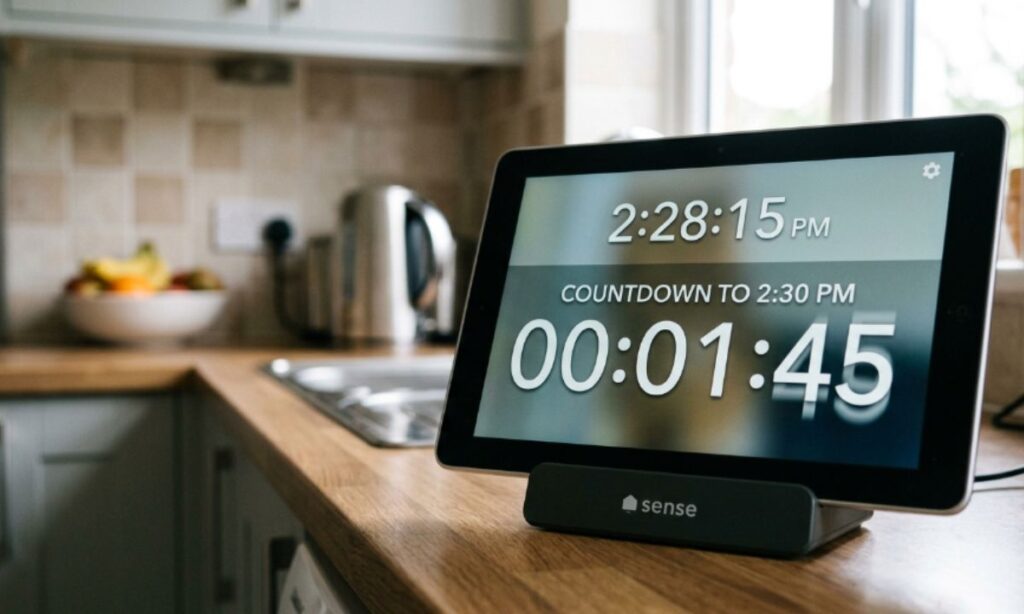
This part trips people up more than it should. The time remaining isn’t just hours and minutes. It’s hours, minutes, and seconds, and that last part never stops moving.
Say you check the clock at 1:59:45 PM. You’re not simply “30 minutes away.” You’re exactly:
- 30 minutes
- 15 seconds
One second later, that becomes 30 minutes and 14 seconds. Then 13. Then 12.
That’s why a live countdown clock keeps refreshing instead of showing one fixed number. It isn’t glitching. It’s doing its job. Most countdown tools refresh automatically so the hours, minutes, and seconds on screen always match your device’s clock.
Ways to Calculate the Time Until 2:30 PM
There’s more than one way to find out how long until 2:30 PM, depending on how precise you need to be and how much effort you want to put in.
Manual calculation
This is the old-fashioned way, and it still works fine for quick estimates.
Start with:
- Your current time
- Today’s date (in case you’re counting across midnight)
Then subtract your current time from 2:30 PM.
For example, if it’s 11:45 AM right now, the math looks like this:
- Target: 2:30 PM
- Current: 11:45 AM
- Difference: 2 hours and 45 minutes
That’s straightforward when you’re dealing in whole minutes. It gets messier once seconds enter the picture, which is where a calculator earns its keep.
Using a Countdown Calculator
A countdown calculator does the subtraction automatically and keeps updating as time passes. You plug in the target time, in this case 2:30 PM, and it handles the rest.
A good one gives you:
- The exact duration remaining
- Automatic updates every second
- Time zone support
- Fewer chances for calculation errors
- A faster way to plan around a deadline
Using a Duration Calculator
A duration calculator is a bit more flexible. Instead of only measuring “now until 2:30 PM,” it can compare any two points in time, including different dates.
That’s useful if you’re planning something further out, like:
- This Saturday
- August 2
- November 3
- December 5
Typing the dates into a calculator beats scribbling times on a sticky note that disappears under a coffee cup by Thursday.
Understanding 2:30 PM in Different Time Formats
Not every country reads time the same way, and 2:30 PM looks different depending on the format.
In the 12-hour clock, it’s written as:
- 2:30 PM
In 24-hour time, it becomes:
- 14:30
In military time, it’s read as:
- 1430
So if you’ve ever wondered, is 2:30 PM the same as 14:30? Yes, they’re the same moment, just written differently.
And if you’ve asked what 1430 in military time means, the answer is simply 2:30 PM. Nothing hidden in the numbers, even though military time can look intimidating at first glance.
Comparing 2:30 PM with Nearby Times
Sometimes 2:30 PM isn’t the exact number you need. You’re comparing it against other points in the afternoon to plan a schedule.
Common afternoon reference points near 2:30 PM include:
- 2:00 PM
- 2:15 PM
- 2:25 PM
- 2:35 PM
- 2:40 PM
- 2:45 PM
- 3:00 PM
And if you’re working backward from the morning, these come up often too:
- 9:00 AM
- 9:30 AM
- 10:00 AM
- 10:30 AM
Lining up nearby times like this helps you estimate travel time, meeting length, or how long a task will actually take, without opening your calendar app every five minutes.
Using a Live Countdown for Better Planning
A live countdown updates on its own, every second, without you refreshing anything.
Unlike a plain clock, it shows you:
- Hours remaining
- Minutes remaining
- Seconds remaining
- The exact time left until your target
This comes in handy for things like:
- A meeting
- An appointment
- A deadline
- A presentation
- An online class
- A workout session
- A live stream
- Exam prep
- School pickup
Plenty of people keep a live countdown open in a browser tab next to their work. It might sound like overkill, but it keeps the deadline in view without needing to think about it constantly.
Time Zones Matter More Than People Think
2:30 PM where you are isn’t 2:30 PM everywhere. Your local time depends entirely on your time zone, and that catches people off guard more often than you’d expect.
For example, 2:30 PM in London is a completely different clock time in:
- Asia/Karachi
- New York
- Sydney
This matters most when you’re setting up:
- A remote interview
- An international conference call
- An online class with people in another country
- A global product launch
- A family video call across time zones
Skip the time zone check, and someone ends up joining an hour early, or worse, an hour late, wondering why the room is empty.
Daylight Saving Time Can Change Everything
Daylight saving time (DST) adds another wrinkle. Countries like the UK and the US shift their clocks forward or back at certain points in the year.
If your countdown tool doesn’t account for daylight saving time, the number it shows you could be off by an hour without any warning. That’s an easy mistake to make and an annoying one to catch late.
Most modern countdown and future time calculator tools adjust for DST automatically, so you don’t have to remember which weekend the clocks changed.
Popular Tools That Help Track the Countdown
A basic timer isn’t your only option anymore. Today’s tools go further, and picking the right one makes tracking time far less of a chore.
Useful options include:
- A countdown timer
- A countdown widget for your desktop or phone
- A dedicated timer app
- A digital clock countdown
- A time tracker
- A reminder timer
- A schedule planner
- A deadline tracker
Some of these sync with internet time servers, which keeps every device showing the same number down to the second. Small detail, but it matters when timing actually counts.
Productivity Benefits of Knowing the Exact Countdown
Checking how long until 2:30 PM isn’t only about curiosity. Knowing the exact number left in your day helps you plan what’s realistic to finish before it arrives.
It supports things like:
- Planning your remaining tasks
- Better time management
- Staying organized through the afternoon
- Keeping focus on what’s due next
- Preparing properly for an event
If you have a meeting, a deadline, or a presentation lined up for 2:30 PM, knowing exactly how much time is left helps you prioritize instead of guessing how much you can squeeze in.
Many people find it more useful to work backward from a deadline instead of just watching the clock move forward. Once you know your stopping point, it’s easier to decide what actually fits before then.
Morning vs Afternoon Countdowns
Waiting through the morning feels different from waiting through the afternoon, even if the clock is doing the same thing either way.
Morning countdowns usually involve:
- Breakfast
- Checking emails
- A workout
- Getting to school or work on time
Afternoon countdowns, closer to 2:30 PM, tend to involve:
- Lunch wrapping up
- Meetings starting
- School pickup
- Project deadlines closing in
By evening, most people are already thinking about tomorrow, adjusting plans and reviewing what didn’t get finished. The pattern repeats daily, even if you don’t notice it happening.
Choosing the Right Countdown Tool
Not every countdown tool is built the same way, and the differences matter more than they seem at first.
When picking one, look for:
- A live digital clock display
- Automatic refresh every second
- Accurate time remaining calculation
- Clock synchronization with a reliable time source
- Support for your local time zone
- A clean, readable countdown display
Better synchronization means fewer surprises. Nobody wants to find out their timer was thirty seconds behind right before something important starts.
Frequently Asked Questions
How many hours until 2:30 PM?
It depends on your current time. Subtract your current hour from 2:30 PM to get the answer, or use a countdown tool for an instant result.
How many minutes until 2:30 PM?
Subtract your current time from 2:30 PM, including any partial hours, to get the exact number of minutes left.
What time is left until 2:30 PM?
A live countdown gives you the exact remaining time in hours, minutes, and seconds, updated continuously.
How much longer until 2:30 PM?
The answer keeps changing every second, since time doesn’t pause while you’re checking.
Is 2:30 PM the same as 14:30?
Yes. 2:30 PM in the 12-hour clock is exactly 14:30 in the 24-hour format.
What is 1430 in military time?
1430 in military time is 2:30 PM.
Why does my countdown change every second?
Because every second that passes reduces the time remaining. A live countdown reflects that in real time.
Final Thoughts
At first glance, how long until 2:30 PM looks like one of the simplest questions you could type into a search bar. But behind it sits real scheduling, real deadlines, and sometimes a bit of impatience too. Whatever you’re measuring it in, hours, minutes, or seconds, you’re really just measuring how much of your day is left to use.
Whether you’re counting down to a meeting, a presentation, a class, or just the end of a long afternoon, an accurate countdown makes the wait easier to manage. The exact number depends on your current time, your time zone, and whether daylight saving time applies where you are.

Pastor John is a devoted spiritual guide with years of experience in ministry and biblical teaching. Passionate about helping others grow in faith, he shares practical insights, prayer guidance, and reflections from the Bible to inspire a closer relationship with God. His writings aim to encourage, uplift, and lead readers on a path of spiritual growth and inner peace.